The Short Answer
Faulkner HR Solutions conducts independent workplace investigations for Texas employers when the matter needs outside capacity, expertise, or impartiality. After a conflict check and written scope, we review documents, interview relevant participants, and prepare findings tied to the facts and applicable policy. Legal conclusions and privilege strategy remain with employment counsel.
The report and the decision: the agreed file can include an allegation matrix, evidence and interview records, credibility analysis where needed, and written findings organized by allegation. A decision briefing is included when scoped. We conduct the fact-finding; the employer preserves records, enables access to witnesses, manages immediate workplace measures, and decides what action follows.
Cost and scope control: allegations, witness and document limits, locations, and report requirements determine whether the engagement uses a fixed fee or capped hourly estimate. New allegations or additional participants can change the work; changes are agreed in writing. Any post-report employee relations advice is a separate engagement.
Reviewed August 30, 2026 by Dr. Thomas W. Faulkner, DBA, SPHR. Confidentiality is maintained to the greatest extent possible consistent with a thorough investigation and applicable obligations.
Why Employers Bring In an Outside Investigator
Investigation risk is set early: who controls the investigator, which allegations are in scope, what evidence must be preserved, and how witnesses will be interviewed. An improvised process can omit material evidence or make a reasoned conclusion look predetermined.
Outside involvement is appropriate when independence, capacity, or investigation expertise cannot be established internally—especially when the allegation involves a manager, executive, owner, board member, or another person with direct or indirect control over the investigator. A trained, genuinely neutral internal investigator may still be appropriate for a routine matter. See the EEOC's investigation guidance for small employers.
What We Investigate
Harassment and discrimination complaints. Retaliation claims. Policy violations and misconduct. Conflict between employees or between an employee and a supervisor. Complaints against leadership, elected-official interference in personnel matters, and sensitive nonprofit situations involving boards, donors, or volunteers.
For municipalities and public entities, we understand the additional layer: public records exposure, executive session rules, civil service considerations, and the political environment around personnel decisions. For nonprofits, we understand board dynamics and funder scrutiny. For small businesses, we understand that the accused may sit ten feet from the complainant.
How the Investigation Works
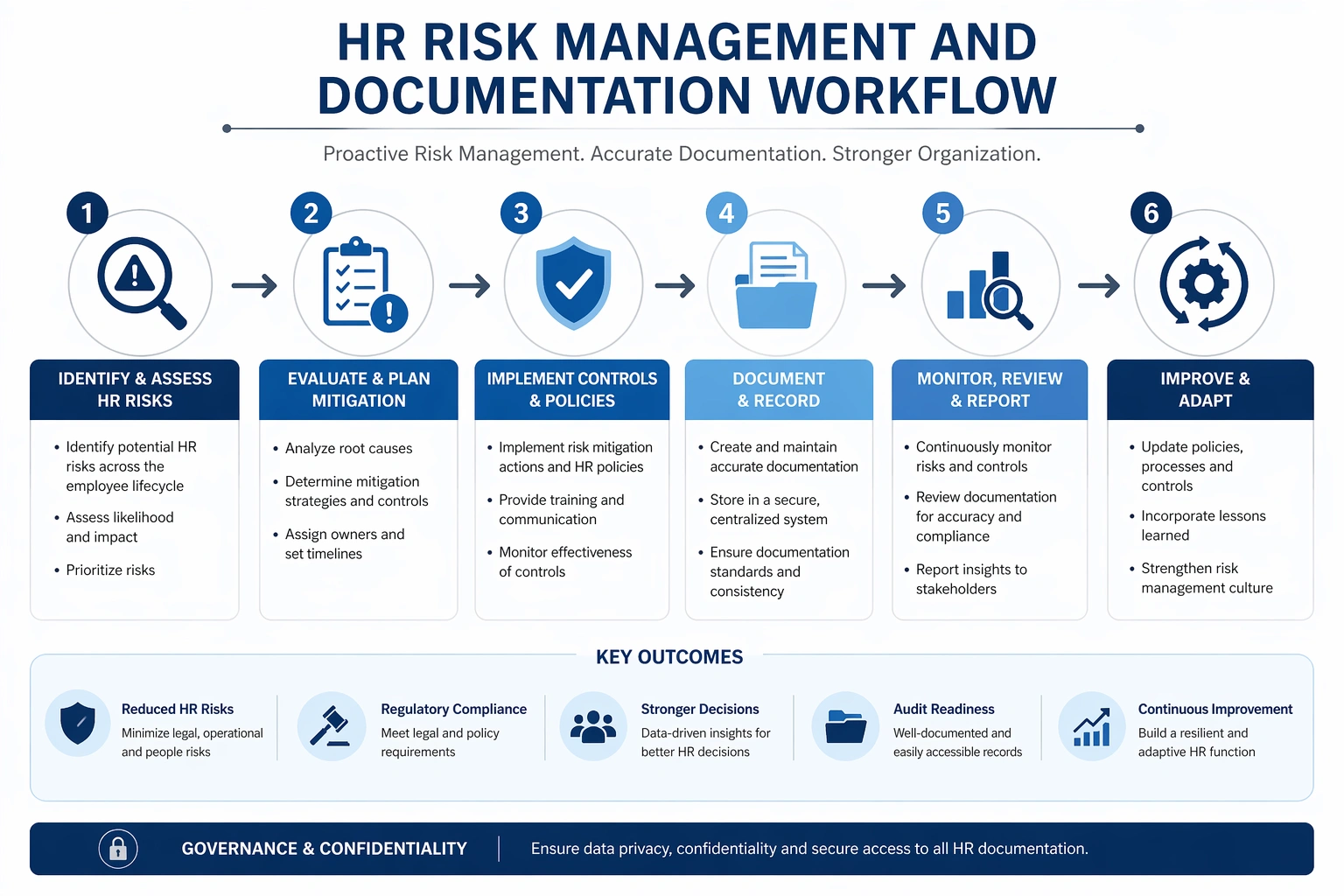
The process is structured from intake to report. We define scope with you up front: the allegations, the policies at issue, and the decision the investigation must support. We review documents, interview the complainant, the respondent, and relevant witnesses, and document every step.
You receive a written report with findings of fact, credibility assessments where needed, and conclusions tied to your policies. We do not make the discipline decision for you. We give you a record that lets you make it with confidence, and we can advise on next steps under a separate engagement if you want that support.
What the Investigation File Can Include
Outputs are selected in the engagement letter rather than assumed. Depending on scope, the file can include:
- written scope and allegation matrix;
- evidence request, preservation list, and evidence log;
- interview plan and documented interview records;
- credibility analysis where conflicting accounts require it;
- findings organized allegation by allegation, with facts and policy references separated from legal conclusions; and
- an executive summary or decision briefing, when included.
Before the first interview: preserve relevant email, messages, documents, access records, and video under the employer's retention and counsel instructions; limit unnecessary discussion; identify immediate safety or anti-retaliation steps; and avoid promising absolute secrecy.
What a Defensible Investigation Protects
A properly run investigation is often the difference between a complaint that resolves and a claim that escalates. Agencies and courts look at whether the employer took the complaint seriously, acted promptly, followed a consistent process, and reached a reasoned conclusion. A thin or biased investigation record works against you on every one of those questions.
There is also an internal audience. Employees watch what happens when someone complains. A credible process builds trust and encourages early reporting. A dismissive one teaches people to go straight to a lawyer.
Good Fit / Poor Fit
This is a good fit if:
- A complaint involves a manager, executive, owner, board member, or family member
- The outcome could lead to termination, a claim, or public scrutiny
- Nobody on staff has real investigation training or capacity
- You need a documented fact-finding record that supports later agency, counsel, or management review
- A prior internal attempt went sideways and you need it done right
This is a poor fit if:
- You have a trained, genuinely neutral internal investigator and a routine matter
- You want a predetermined conclusion documented. We do not do that
- You need legal representation. We work alongside employment counsel, we do not replace them
The Investigation Scope Ladder
Investigations overrun when nobody wrote down where they stop. Faulkner HR Solutions scopes every matter to one of three tiers at intake, and converts between them in writing rather than silently.
| Tier | Scope | What it covers | How it is priced |
|---|---|---|---|
| Tier 1 | Bounded | One complainant, one respondent, a defined witness and document limit | Fixed fee is possible because the limits are written before intake |
| Tier 2 | Expanded | Multiple allegations, respondents, or sites within a stated ceiling | Fixed fee at the expert tier; findings issued allegation by allegation |
| Tier 3 | Open | Scope genuinely unknowable at intake — anonymous complaint, no named respondent | Capped hourly with the cap agreed in writing before any work begins |
What Makes an Investigation Process Credible
Discharge and constructive discharge was the most frequently raised issue across EEOC merits suits in FY2025, appearing in 64 filings. In one matter that year the agency found an employer's own investigation inadequate specifically because it failed to follow up or interview key witnesses.
The conclusion is not what gets examined. The process that produced it is.
Source: EEOC Office of General Counsel FY2025 Annual Report.
Frequently Asked Questions
How much does a workplace investigation cost in Texas?
Cost depends on the number of allegations, witnesses, and locations. We quote a fixed fee or a capped hourly estimate after a short scoping call, before any work begins, so you know the investment up front.
How long does a workplace investigation take?
Most single-complaint investigations finish within two to four weeks. Timelines depend on witness availability and scope. Prompt starts matter because delay itself creates legal risk for the employer.
Are workplace investigations confidential in Texas?
Information is limited to people who need it to conduct or act on the investigation, but complete secrecy cannot be promised. For public employers, responsive portions of a file may be subject to disclosure, subject to applicable law and exceptions.
Can you investigate a complaint against an owner or executive?
Yes, subject to a conflict check and defined scope. Outside involvement is useful when independence, capacity, or expertise cannot be established internally, including matters involving an owner, executive, or board member.
Do you work with our employment attorney?
Yes. Many investigations are run in coordination with employment counsel, and counsel can direct the engagement where privilege considerations matter. We provide the investigative capability. Your attorney provides the legal strategy.
Questions Texas Employers Ask
Direct answers from the Faulkner HR Solutions FAQ library for Texas employers:
- How should a Texas employer conduct a workplace investigation?
- Who should investigate an employee complaint in a small Texas business?
- Are workplace investigations confidential in Texas?
- What HR risks arise after an employee resigns during an investigation?
- When can an employee investigation become a public record issue?
- What should Texas HR do when employees complain about a supervisor?
Confirm an Appropriate Investigation Scope.
Use the initial consultation to outline the allegation, people involved, time sensitivity, and any counsel involvement. We will confirm the conflict-check and scoping process, then define the work, fee basis, and expected timing before proceeding.
Not ready for a call? Take the free HR System Risk Diagnostic.