What Organizational Development Consulting Actually Fixes
Organizational development consulting fits when unclear authority, conflicting priorities, failed handoffs, or outdated reporting lines keep reproducing the same operating problem. Faulkner HR Solutions examines how decisions and work actually move, then develops structure options, decision rights, and a change adoption plan around the diagnosed constraint.
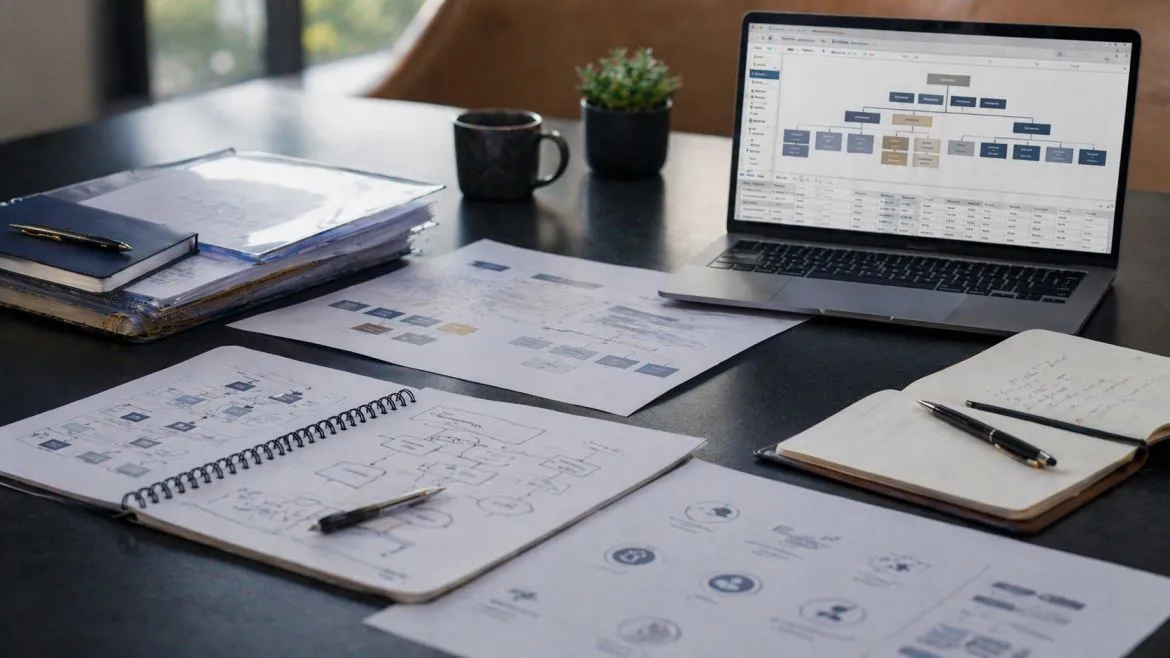
What leaders can act on: the agreed work can produce a current-state workflow map, decision-rights matrix, role and structure options, and an adoption plan with measures and review dates. We lead the analysis, design, and stakeholder work in scope. Leadership chooses the operating model, assigns decision authority, and makes time and resources available for implementation.
A phased commitment: confirm the organizational boundary, affected teams, stakeholder input, design decisions, and implementation support before setting the fee and schedule. Each phase has an approval point. A focused intervention may take 60–90 days; a comprehensive redesign may span 6–12 months, with the actual sequence set around the agreed problem and client capacity.
Resistance to change is not a character flaw. It is a rational response to uncertainty. When employees do not understand why a change is happening, they fill the information vacuum with the worst-case scenario. When they do not believe leadership is committed to the change, they wait it out. When they do not have the skills or resources to operate in the new way, they revert to the old way. Effective change management addresses all three of these dynamics — not just the first one.
What the Engagement Makes Visible
| Artifact | Decision it supports | Who uses it |
|---|---|---|
| Current-state workflow and handoff map | Where work stalls, duplicates, reverses, or loses ownership | Process owners and affected teams |
| Decision-rights matrix | Who recommends, decides, executes, and must be consulted | Executive team and managers |
| Role and structure options | Which reporting or role changes address the diagnosed constraint | Leadership and governing stakeholders |
| Change adoption plan | What behavior, tool, owner, communication, and reinforcement changes by stage | Sponsors, managers, and implementation owners |
| Adoption measures and review cadence | Whether the new operating model is being used and where it is breaking | Sponsor and implementation team |
How to Fix Organizational Dysfunction Through Structural Change
Organizational development that produces lasting change requires more than a culture initiative or a reorganization chart. The interventions that hold:
- Diagnose before redesigning: Structural changes made without a clear diagnosis of root causes produce new problems without solving old ones.
- Align structure to strategy: Organizational design must reflect how work actually flows, not how it looked five years ago.
- Build accountability into the redesign: New structures without new accountability mechanisms revert to old behaviors within months.
- Develop change leadership capacity: Change fails when leaders are not equipped to manage the resistance, ambiguity, and transition that accompany it.
- Measure progress against defined outcomes: Organizational development without clear success metrics is a process without an endpoint.
Our Organizational Development Approach
Organizational development is a discipline, not a project. It is a systematic approach to improving organizational effectiveness through planned, evidence-based interventions that address the human dimensions of change. Our approach is built on three foundational principles: diagnose before prescribing, involve the people closest to the work, and build internal capacity rather than creating dependency on external consultants.
Structured diagnosis of the organization's current state — culture, structure, processes, and capabilities — to understand the gap between where the organization is and where it needs to go.
Development of a change management plan that addresses the specific resistance patterns, communication needs, and capability gaps identified in the assessment — not a generic change management template.
Structured engagement of key stakeholders — particularly middle managers and front-line supervisors, who are the make-or-break layer in any change initiative — to build understanding, commitment, and capability.
Hands-on implementation support with ongoing monitoring of adoption indicators and reinforcement mechanisms to ensure the change sticks rather than fading within 90 days.
Why Most Organizational Change Efforts Fail
Most organizational change efforts fail to produce lasting results because they are approached as announcements instead of systems. Organizations initiate change initiatives, restructuring efforts, or transformation projects, but fail to address the underlying conditions that caused the problem in the first place.
When change management is disconnected from operational reality, the result is short-term disruption followed by a return to previous behaviors. The most common reasons organizational change fails are consistent across industries and organizational types:
- Announcing change without building capacity for it: Telling employees to change without providing the tools, training, and support required to execute creates resistance and inconsistent adoption.
- Reorganizing without diagnosing root causes: Changing reporting structures or moving roles on an org chart without understanding why the current system is failing produces a different configuration of the same dysfunction.
- Culture initiatives without behavioral accountability: Organizational culture does not change through messaging alone. Without clear expectations, reinforcement, and consequences, behavior remains unchanged.
- Change driven by leadership preference instead of operational need: Organizational change initiatives that are not grounded in measurable business problems often create confusion, resistance, and reduced trust in leadership.
- No measurement of change outcomes: Without defined success metrics, organizations cannot determine whether change efforts improved performance, reduced risk, or strengthened execution.
Aligning Culture With Strategy
Culture is not a values statement on a wall. It is the sum of what the organization actually rewards, tolerates, and punishes — and it is far more powerful than any strategy document. Organizations that try to execute a strategy that is misaligned with their culture will lose. The culture will win every time. The question is not whether to manage culture, but whether to manage it intentionally or let it manage you.
Culture alignment work begins with an honest assessment of the current culture — not the aspirational culture, but the actual one. What behaviors are rewarded? What behaviors are tolerated that should not be? Where does the stated culture diverge from the lived experience of employees? The answers to those questions define the gap that needs to be closed, and they are rarely comfortable to confront.
Who Needs Organizational Development Consulting
Organizational development consulting is most valuable for organizations facing persistent performance issues, structural misalignment, or growth-related complexity. When problems repeat despite new initiatives, the underlying system — not the people — is usually the root cause.
The organizations that benefit most from organizational development consulting include:
- Organizations experiencing chronic dysfunction: Repeated turnover, persistent performance gaps, and ongoing conflict are indicators of structural issues that require system-level redesign rather than isolated fixes.
- Municipalities and public agencies undergoing leadership transitions: New leadership often inherits legacy systems that are misaligned with current operational demands, creating friction, inconsistency, and performance breakdowns.
- Organizations scaling rapidly: Growth exposes weaknesses in informal systems. Without intentional organizational design, scaling leads to confusion, role ambiguity, and reduced accountability.
- Nonprofits navigating mission drift or governance challenges: Organizational development helps clarify decision-making authority, board relationships, and accountability structures in mission-driven environments.
Where Organizational Development Stops
This page owns organization-level structure, decision rights, workflow, and change adoption. If the structure is sound but expectations, check-ins, rating logic, calibration, or appraisal documentation are the problem, the correct route is performance management consulting built around the CIVIC model. If the need is a manager cohort practicing observable supervisory behavior, use leadership development consulting. The diagnostic may surface either need, but they are not bundled into organizational development by default.
Organizational Transformation Case Study
A large non-profit was operating with a one-size-fits-all performance management system that had been in place for over a decade. The system was not aligned with the organization's strategy, produced ratings that supervisors did not believe in and employees did not trust, and generated annual reviews that were completed as a compliance exercise rather than a development conversation. Employee engagement surveys consistently identified the performance management process as one of the organization's lowest-rated practices. Leadership knew the system was broken but had no clear path to fixing it without creating more disruption than the broken system was causing.
We designed and implemented a complete performance management system overhaul using a participatory design process that involved employees and supervisors at every stage. Key elements included:
- Competency framework development — a set of core organizational competencies aligned with the strategic plan, with department-specific competency additions for each major function
- New performance management system design built around quarterly check-ins rather than annual reviews, with clear expectations, ongoing feedback, and development planning
- Supervisor training on performance conversations, feedback delivery, and documentation practices
- Culture champion recruitment and training — a cohort of internal advocates who helped roll out the new system and provided peer support during the transition
- Change communication strategy that addressed the specific concerns employees had raised in engagement surveys about the old system
According to the client, the redesigned system was adopted with higher compliance and engagement than the prior process, and employee satisfaction with performance management rose 34 percentage points in the following year's engagement survey. The client also reported that supervisors found quarterly check-ins made difficult conversations easier and retained the culture-champion model. The baseline, sample, response rates, calculations, and underlying survey data are unpublished and have not been independently verified, so the 34-point figure is a client-reported engagement result rather than a guaranteed outcome.
Organizational Development Insights
Organizational development problems rarely stay isolated. They show up through unclear roles, broken workflows, inconsistent leadership, and change efforts that do not hold.
What Structural Work Returns
| Finding | Figure | Source |
|---|---|---|
| Organizations focused on employee performance outperforming peers | 4.2x more likely | McKinsey |
| Associated revenue growth advantage | ~30% higher | McKinsey |
| Associated attrition advantage | 5 percentage points lower | McKinsey |
| Managers who do not trust their performance management process | 61% | Deloitte Global Human Capital Trends, 2025 |
| Workers who do not trust it | 72% | Deloitte, 2025 |
| HR professionals reporting fewer than half of managers address underperformance | 61% | SHRM, 2025 |
Comprehensive redesign is phase-gated: no phase begins before the prior one is signed off. That gate is what keeps a twelve-month engagement from becoming eighteen.
Related: Performance Management on the CIVIC Model · Succession Planning · span of control calculator.
Sources: McKinsey; Deloitte Global Human Capital Trends, 2025; SHRM, 2025.
Frequently Asked Questions
What is organizational development consulting?
Organizational development consulting helps organizations improve performance by diagnosing structural dysfunction and redesigning the systems, processes, and accountability structures that produce it. This includes organizational design, leadership alignment, workflow optimization, and performance management systems.
How is organizational development different from HR consulting?
HR consulting typically focuses on specific functions such as compliance, hiring, or employee relations. Organizational development consulting addresses the broader system — including structure, decision-making, accountability, and leadership alignment — that determines how effectively the organization operates.
How do I know if my organization needs organizational development consulting?
Organizations often need organizational development consulting when problems persist despite repeated interventions. Common indicators include recurring turnover, inconsistent performance across teams, unclear roles and responsibilities, leadership misalignment, and initiatives that fail to produce lasting results.
How long does organizational development take?
The timeline depends on scope and complexity. A focused organizational development intervention may take 60 to 90 days, while a comprehensive organizational redesign or transformation effort may span multiple phases over 6 to 12 months.
Can organizational development reduce employee turnover?
Yes. Structural dysfunction — such as unclear roles, inconsistent accountability, poor leadership alignment, and misaligned incentives — is a primary driver of voluntary turnover. Organizational development addresses these root causes, improving retention and workforce stability.
What does organizational development consulting include?
Organizational development consulting may include organizational structure redesign, role clarity, leadership alignment, performance management systems, process improvement, and accountability frameworks that improve how work flows through the organization.
Related Services
Questions Texas Employers Ask
Direct answers from the Faulkner HR Solutions FAQ library for Texas employers:
Locate the Operating Problem Before Redesigning.
Describe the decision, handoff, or change effort that keeps breaking down and who is affected. We will clarify whether organizational development fits and identify the people, records, and approval points needed for a scoped engagement.